Huddersfield Commercial Burglar Alarms –
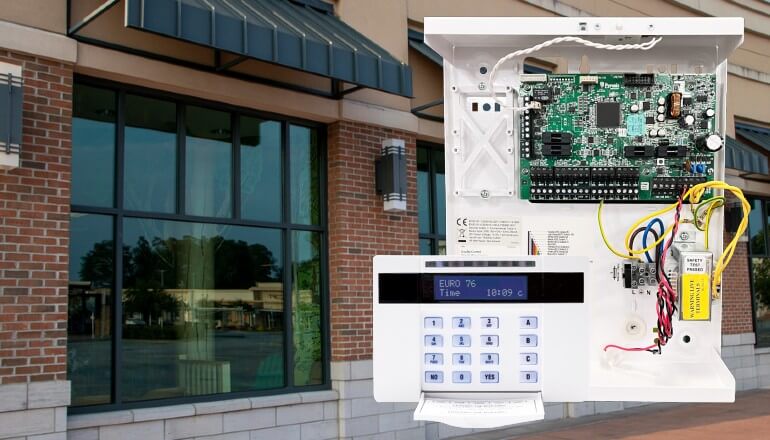
Huddersfield’s commercial sector spans industrial estates, manufacturing facilities, retail units and professional office spaces. Many premises are larger, multi-area buildings with varying levels of access and activity throughout the day. In these environments, burglar alarm systems must be designed with structure, scalability and reliability in mind. A simple alarm setup is rarely sufficient — businesses require a system that can manage risk across the entire site.
One of the defining requirements for Huddersfield businesses is the ability to secure different areas independently. Premises may operate across multiple zones, with some areas active while others are closed. Zoning allows a burglar alarm system to reflect this operational reality. For example, a production area may be active early in the morning, while office spaces remain secured until later in the day. This flexibility ensures that security measures support business operations rather than restrict them.
Detection strategy must be carefully planned. In commercial environments, a layered approach is typically used to provide both early warning and internal monitoring. Perimeter protection forms the first line of defence. Door contacts, window sensors and vibration detectors trigger the alarm as soon as an entry point is compromised. In Huddersfield’s industrial and retail environments, where multiple access points are common, this early detection is essential.
Internal detection provides a second layer of protection. Motion sensors are installed in key areas such as corridors, storage zones, offices and access routes. In larger premises, sensor placement must be carefully considered to ensure full coverage without blind spots. Dual-technology sensors are often used in these environments to improve accuracy and reduce the risk of false alarms caused by temperature changes or airflow.
Industrial sites introduce additional challenges. Large open spaces, machinery and environmental factors such as dust or vibration can affect sensor performance. Alarm systems must be designed to account for these conditions, ensuring reliable detection without unnecessary activations that could disrupt operations.
Signalling is a critical component of commercial burglar alarm systems. Many Huddersfield businesses use monitored systems connected to an alarm receiving centre via dual-path signalling. This ensures that if an alarm is triggered, a response can be initiated immediately. For premises that are unoccupied overnight or during weekends, this level of monitoring is essential.
Integration with other security systems enhances overall protection. CCTV systems can be linked to the alarm, allowing visual verification of activations. This helps reduce false call-outs and provides immediate insight into what is happening on site. Access control systems can also be integrated, ensuring doors respond appropriately during an alarm event.
Modern alarm systems offer improved control and accessibility. Mobile applications allow authorised users to arm or disarm the system remotely, receive real-time alerts and monitor system activity. This is particularly useful for business owners and managers who need to maintain oversight while off-site.
Maintenance is essential to ensure system reliability. Commercial alarm systems should be serviced regularly, with sensors, control panels and communication pathways checked for faults. Routine testing ensures the system remains operational and helps identify any issues before they impact security.
False alarms can be particularly disruptive in commercial environments. Frequent activations can interrupt operations and lead to unnecessary call-outs. Proper system design, correct sensor placement and regular maintenance all help minimise the risk of unwanted activations.
For businesses in Huddersfield, a commercial burglar alarm system must be robust, flexible and tailored to the demands of the premises. When designed correctly, it provides reliable intrusion detection that supports both security and operational efficiency, forming a key part of a comprehensive security strategy.